Stable today
REST API, auth, audit trail, reports, and core operations.
Tecnocomunes/Hackerspace STGO
Community accounting with real operational auditability
Abhackus already covers secure login, role-based access, approval/rejection accounting flows, exportable reports, and admin operations through web, CLI, and TUI. The web layer is still being consolidated, but the backend and operational base are already in place.
Stable today
REST API, auth, audit trail, reports, and core operations.
In consolidation
Operational web UI, onboarding, and UX consistency.
Next stage
Basic mode, end-to-end demo, and legacy cleanup.
Modules that support the current production direction and REST-first operation model.
Module
Core backend (Axum + SQLx + auth + accounting + Telegram bot)
View diagram
Module
Operational web interface (Leptos/WASM + Tailwind)
View diagram
Module
Bilingual public landing (Astro)
View diagram
Module
Terminal operations for admins and support
View diagram
Module
PostgreSQL schema evolution
View diagram
Short path to boot a test environment, validate login, and walk through the minimum accounting flow.
Clone the repository and define `DATABASE_URL`, `ABHACKUS_JWT_SECRET`, and `ABHACKUS_METRICS_TOKEN`.
Start PostgreSQL and migrate: `make db-up && make migrate`.
Run the REST API, validate `/api/health`, and test login from the web UI.
Execute the critical `auth_accounting_reporting_flow_with_ephemeral_db` flow before merge or release.
Controls and evidence that reduce operational risk and improve auditability.
PHASE 01
Finish the active web/auth slice, reduce login friction, and provide a more gradual onboarding flow.
PHASE 02
Bring dashboard, users, reports, and basic/advanced modes into a more consistent web experience.
PHASE 03
Align docs and architecture around the active stack: REST + Web + TUI + PostgreSQL.
Concrete scenarios to show who uses Abhackus and what it solves in practice.
Board
Board members review pending items, approve or reject sensitive income, validate balances, and download club reports for treasury and assembly work.
Administration
An admin creates users, adjusts roles, reviews usage status, handles quota-change requests, and keeps project settings aligned with operations.
Community
Each participant can review personal history, upload proof attachments, request quota changes, and consult personal reports without relying on manual support every time.
Short sequences that show how work moves between people, system behavior, and audit trail.
CLP accounting, project-level breakdown, monthly quota allocation, and periodic reconciliation.
Account creation, superadmin/admin/participant/friend roles, revocable sessions, and password recovery.
Internal messages, contact-admin flows, planned Telegram/SMTP integrations, and read/ACK tracking.
Personal and club HTML/PDF reports, monthly ODS export, and approval traceability with reason and UTC.
Screenshots currently available under `public/screenshots/`, already optimized for web delivery.
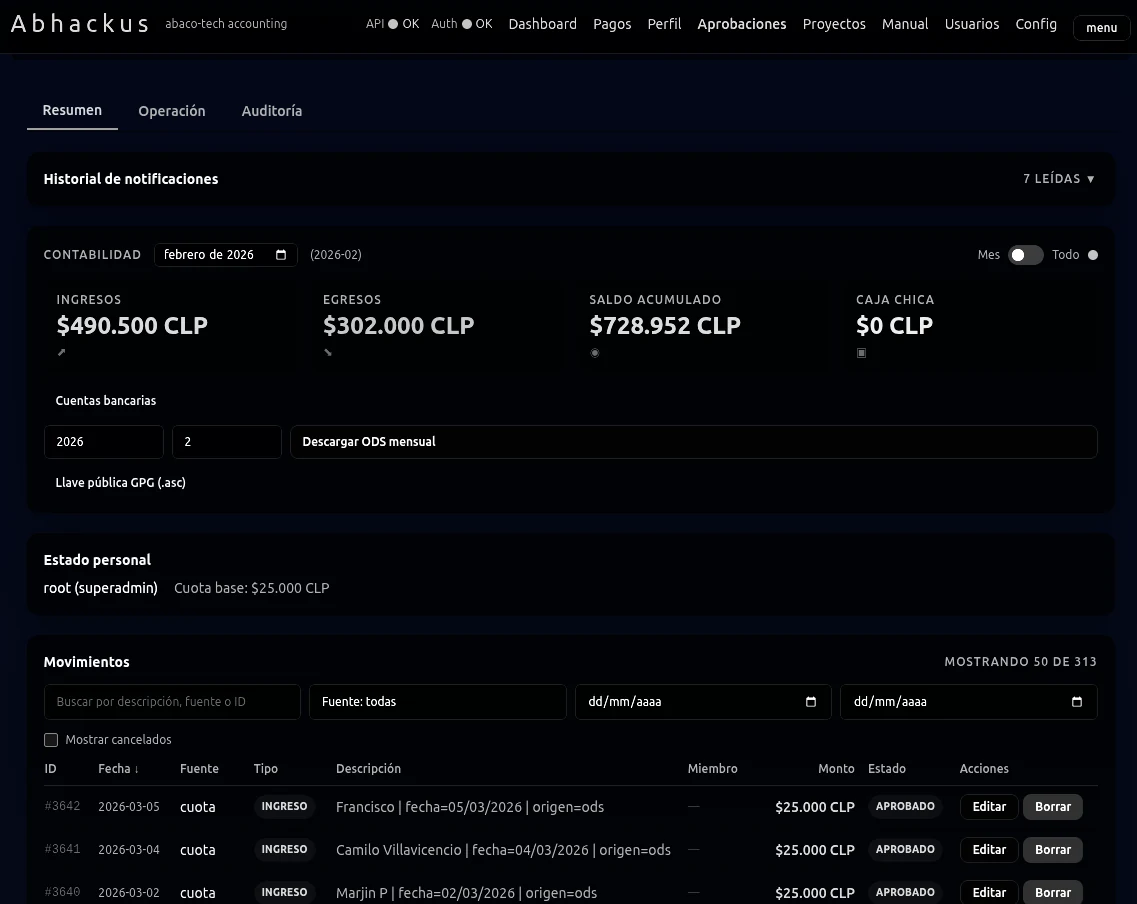
General overview with accounting summary, pending items, and operational status.
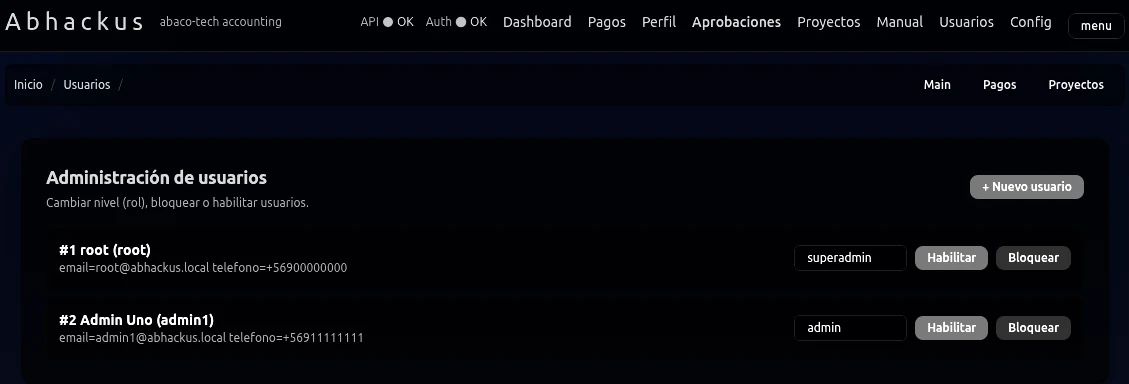
Admin list with roles, active state, and management actions.
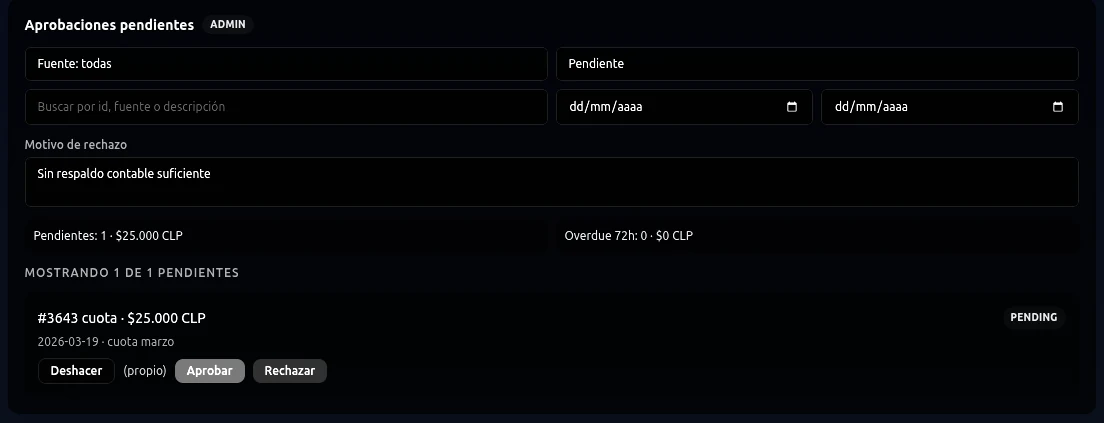
Pending income entries with approve and reject actions.
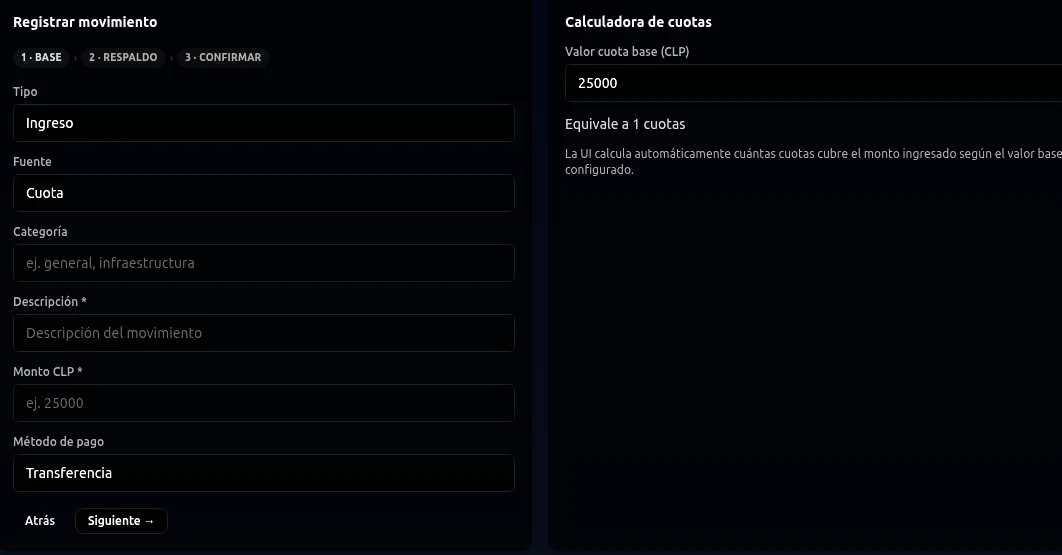
Movement detail with payment method, attachments, and relevant breakdown.
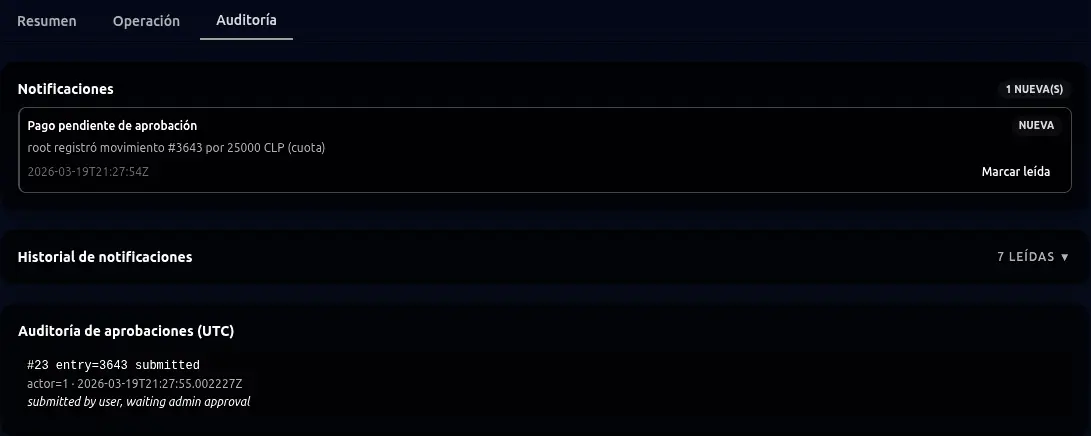
Timeline or table with actor, reason, state change, and UTC.
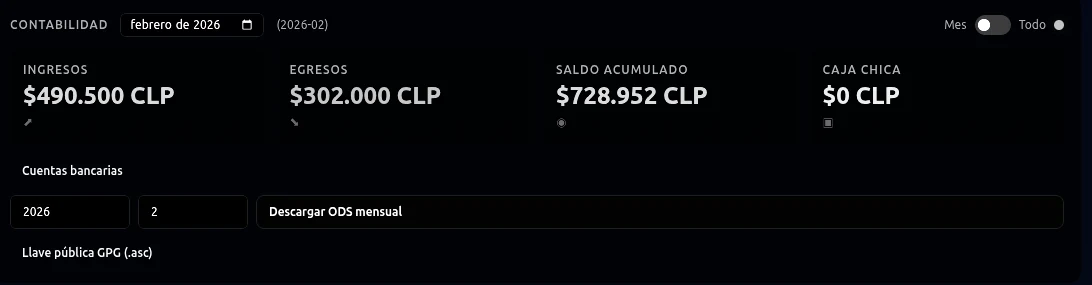
Club/member report or evidence of HTML, PDF, or ODS export.

Admin send flow with audience, requires ACK, and read metrics.
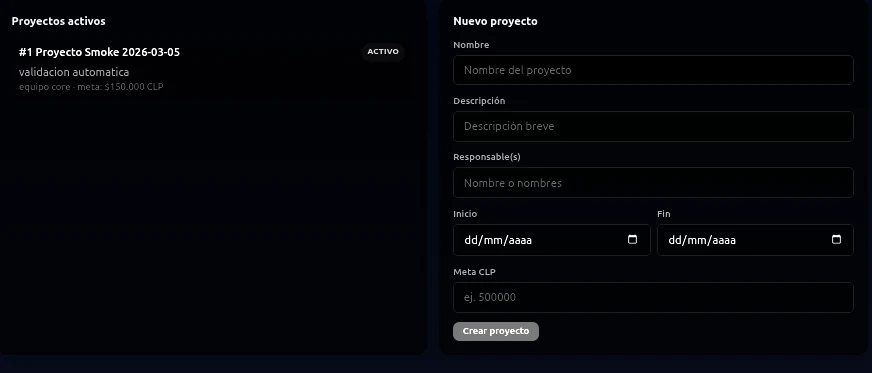
Project identity, default dues, and operational parameters.
Access source code, OS/module binaries, a compilation manual, and community collaboration entry points.
Source
Clone the full repository to inspect, audit, and adapt each module in the stack.
Open repositoryBinaries
Operating-system and module guide to locate, validate, and run prebuilt artifacts.
Open binaries guideManual
Recommended local build path, test/coverage validation, and packaging workflow.
Open technical manualDB
DATABASE_URL format, recommended PostgreSQL version, and commands to obtain host/port/user/database values.
View PostgreSQL pageSecurity
How to generate, store, and rotate ABHACKUS_JWT_SECRET safely for each environment/project.
Open JWT guideAPI
Official REST endpoint contract with authentication and response details in an interactive explorer.
View API docsObservability
Prometheus endpoint, baseline alert rules, and guidance to connect Grafana/Alertmanager.
Open observability pageEfficiency
Why Rust helps reduce runtime resource usage and how to measure it objectively in Abhackus.
Open efficiency analysisCommunity
Contribution path with quickstart guide, prioritized issues, and merge request flow.
Go to community